by Ria Olivier | May 8, 2026 | Commemorative Days
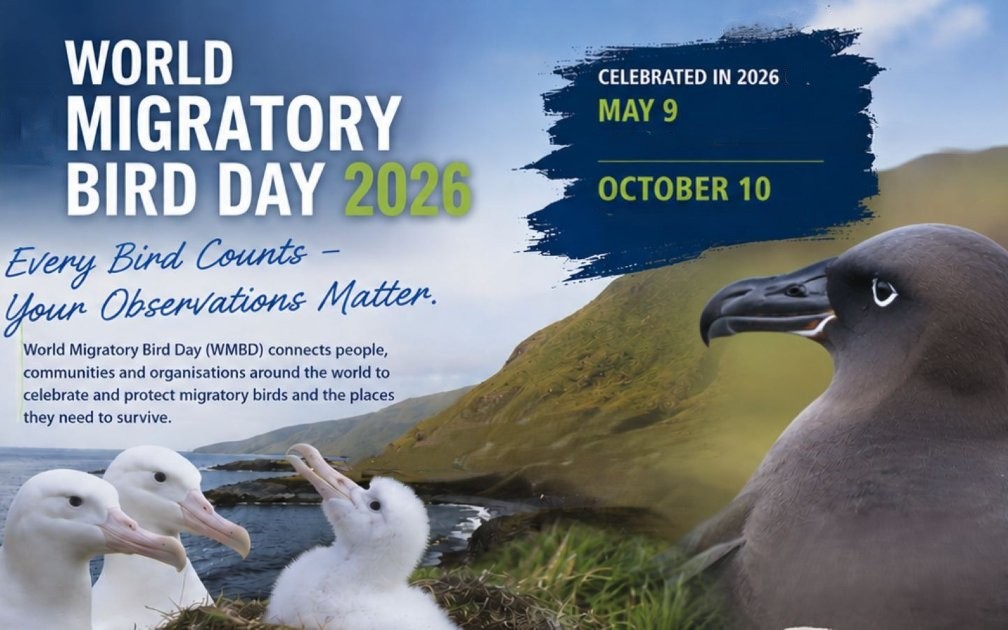
On 9 May 2026, the world once again celebrates World Migratory Bird Day (WMBD), a global campaign dedicated to raising awareness about migratory birds and the importance of international cooperation in conserving them. A second global celebration will take place on 10 October 2026.
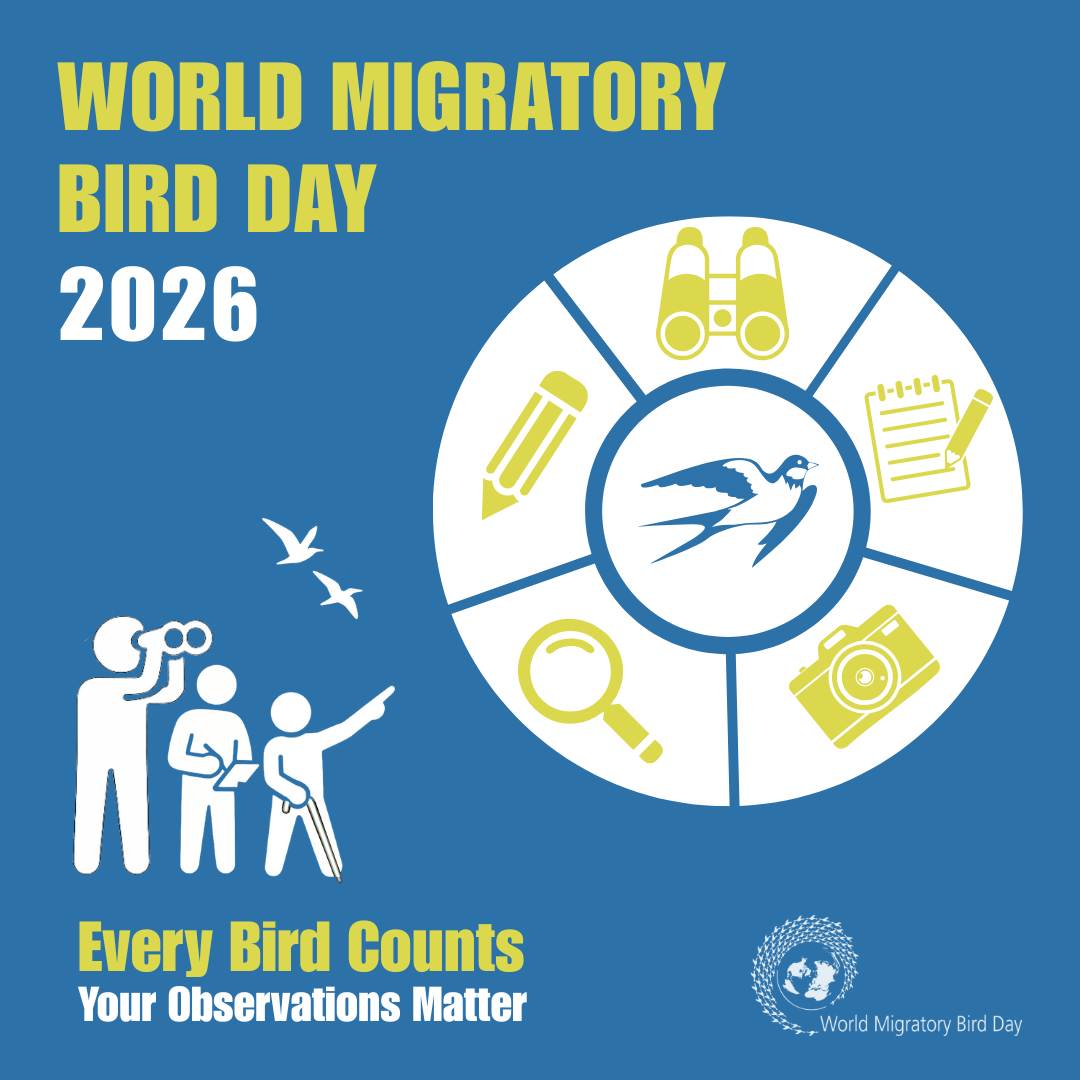
The 2026 theme, “Every Bird Counts – Your Observations Matter,” highlights the critical role that people can play in helping scientists better understand migratory birds through observations, photography, monitoring, and citizen science. For South Africa and the South African National Antarctic Programme (SANAP), this theme resonates strongly. The sub-Antarctic Prince Edward Islands, including Marion Island, are globally significant sanctuaries for migratory seabirds that travel vast distances across the Southern Ocean and beyond. Every photograph, observation, and research record contributes to the growing body of knowledge that helps protect these remarkable species.
Marion Island situated in the Southern Ocean, Marion Island hosts globally populations of migratory seabirds. Species such as the Wandering Albatross, Grey-Headed Albatross, Sooty Albatross, and many more rely on the island for breeding and feeding. Many of these birds undertake journeys across oceans and continents. The island’s landscape and surrounding marine ecosystem make it one of the world’s most natural laboratories for seabird research and conservation. For decades, SANAP has supported internationally recognised research focused on seabirds, marine ecosystems, climate change, and conservation biology on Marion Island and Gough Island. A major contributor to this work is the world-renowned FitzPatrick Institute of African Ornithology at the University of Cape Town. Researchers from the FitzPatrick Institute, together with scientists from several South African and international institutions, have played a leading role in advancing understanding of seabird ecology, migration, breeding success, foraging behaviour, and population trends. This research contributes not only to South African conservation efforts but also to global scientific understanding of migratory species and Southern Ocean ecosystems.
Every Observation Matters – The theme for World Migratory Bird Day 2026 reminds us that meaningful conservation is built on observations made over time. At SANAP stations, researchers, overwintering teams, voyage personnel, and field assistants regularly document bird life through their photographs. One particularly example is a timelapse video recorded by Otto Whitehead during a Marion Island takeover voyage in March 2023. Every image, every sighting, and every observation helps strengthen our collective understanding of migratory birds and the ecosystems on which they depend.
Protecting Birds Through the Marion Mouse-Free Project – Conservation on Marion Island also includes addressing one of the greatest threats facing seabirds on the island: invasive house mice. Over many decades, mice introduced accidentally to Marion Island have had devastating impacts on seabird populations. In response, the Marion Mouse-Free Project was launched as a restoration initiatives and the project aims to eradicate invasive mice from Marion Island and restore the island’s ecological balance. The initiative represents a powerful collaboration involving conservationists, scientists, SANAP partners, donors, and volunteers working together to secure the future of Marion Island’s seabirds.
As we celebrate World Migratory Bird Day 2026, SANAP encourages everyone — researchers, voyage participants, photographers, citizen scientists, and bird enthusiasts — to continue observing, documenting, and sharing the natural wonders of migratory birds.
Because every bird counts.
And every observation matters.
Images: John Dickens – Stefan Schoombie – Jeanne Nel – Greg Hofmeyr – Bruce Dyer
by Ria Olivier | Feb 28, 2024 | Biosecurity, Environment, Invasion Biology, Mice Eradication, Research, SANAP, SANAP Student
The last session within the Marine and Antarctic Research Strategy research theme : : Ecosystems, biodiversity and biodiscovery was chaired by Pierre Pistorius of the Marine Apex Predator Research Unit (MAPRU) at Nelson Mandela University. To kick off the session, the Mouse-Free Marion (MFM) Project’s Assistant Project Manager, Sue Tonin, gave a plenary lecture. This was followed by more presentations on ornithology research. (Above: group photo of MAPRU with Sue Tonin. Left: Pierre Pistorius. Right: Sue Tonin)
Above (l-r): Vonica Perold, Tegan Walker, Shamiso Banda, Danielle Keys, Eleanor Weideman
- Dr Sue Tonin Eradicating Invasive House Mice Mus musculus from Marion Island: Gains and Challenges (Abstract)
- Vonica Perold South Atlantic seabirds can be used as bioindicators to monitor small buoyant plastics at sea. (Abstract)
- Tegan Walker Influence of diet and environmental parameters on Brown Skua breeding success at Marion Island
- Shamiso Banda Gauging the threat: exposure and attraction of Sooty Albatrosses and White-Chinned Petrels to fisheries activities in the southern Indian Ocean
- Danielle Keys Foraging behaviour of adult Wandering Albatrosses (diomedea exulans) in relation to growth and success of their offspring.
- Pierre Pistorius Tracking Southern Ocean predators to identify ecologically important habitat
- Eleanor Weideman Seasonal attendance patterns and habitat use of three avian scavengers at sub-Antarctic Marion Island. (Poster)
Above (l-r):Maelle Connan, Stefan Schoombie, Robyn Adams, John Cooper
Maelle Connan and Stefan Schoombie were part of the Prince Edward Island Scientific Expedition and were able to join the session. Stefan’s presentation was given in the Summer Survey session later on in the day. Support for Sue’s plenary came from Robyn Adams, MFM Communications Officer and Project Assistant, and John Cooper, MFM News Correspondent.
To make your sponsorship to Mouse-Free Marion go to https://mousefreemarion.org/product/hectare/ and become a part of Marion Island’s future.
by Ria Olivier | Feb 26, 2024 | Antarctica, Biosecurity, Engineering, Mammology, Marine Protected Area, Marion Island, Research, SANAP
Dr Mia Wege chaired the session on Marine Mammals during the 6th SANAP Symposium that resorts within the Marine and Antarctic Research Strategy – ecosystems, biodiversity and biodiscovery. The session includes talks on various marine and the presentations were arranged according roughly to species and area. This Included elephant seals, fur seal, Ross seal, whales in ice, whales along the Southern African coast The session was presented in panel, discussion format, that allowed for questions form the audience. (Photo Credit: ALSA Archive)
- Dr Christian Murray: Understanding the drivers of Marion Island’s elephant seal population. (Abstract)
- Leandri de Kock: Considering individual variation when investigating marine predator behaviours during life- history events(Abstract)
- Dr Liezl Pretorius and Dr Greg Hofmeyr (presenting): Canine morphometrics as a tool for distinguishing species, sex and age in Southern Ocean fur seals(Abstract)
- Dr Mia Wege: The conveyor belt of Ross seals in the Lazarev Sea and their behaviour. (Abstract)
- Matthew Germishuizen: Sea ice declines coincide with a period of reduced reproductive success in Southern Ocean top predator (Abstract)
- Oluwaseyi Paul Babalola: Entropy-based Detection and Classification of Bryde’s Whale Vocalizations: An Approach for Understanding and Conserving an Endangered Species(Abstract)
(Above L-R: Dr Christian Murray, Leandri de Kock, Dr Greg Hofmeyr, Oluwaseyi Paul Babalola)
It was great to see the Mammal Research Institute Whale Unit of the University of Pretoria based in Hermanus, Western Cape represented during the symposium by Dr Els Vermeulen, Matthew Germishuizen, Elisa Seyboth and Antonia Immerz. (Above L-R)
The Prince Edward Island scientific expedition was able to join the symposium on the 30th November and Chris Oosthuizen did his presentation in the session, ‘Data Management and the Summer Survey Participants’ chaired by Dr Christel Hansen. Liezel Pretorius was also able to join the conference on the Thursday. (Above L-R: Chris Oosthuizen, Liezel Pretorius, Yinhla Shihlomuhle)
- Dr Chris Oosthuizen. Marine predators: ecosystem sentinels that help inform Southern Ocean management. (Abstract)
An initiative by Mia Wege was to use the SANAP symposium to bring all “bio loggers/trackers” together, that included researchers who tag animals, mostly top predators across the globe. The purpose was to get some structure going and talk about a potential larger workshop specifically for the entire community. The meeting was well represented, and this was a great opportunity used.
Two of the Principal investigators of the project were able to attend the symposium. ( Nico de Bruyn(left) – University of Pretoria and Jaco Versfeld (Right) Stellenbosch University)
by Rabia Mathakutha | Sep 28, 2023 | Commemorative Days, Current Event, Important Dates, International Days, SA Agulhas II, SA Polar Infratsructure, SA Polar Research Infrastructure, SANAP, SAPolarRI, SAPRI, Science, Southern Ocean, Uncategorised
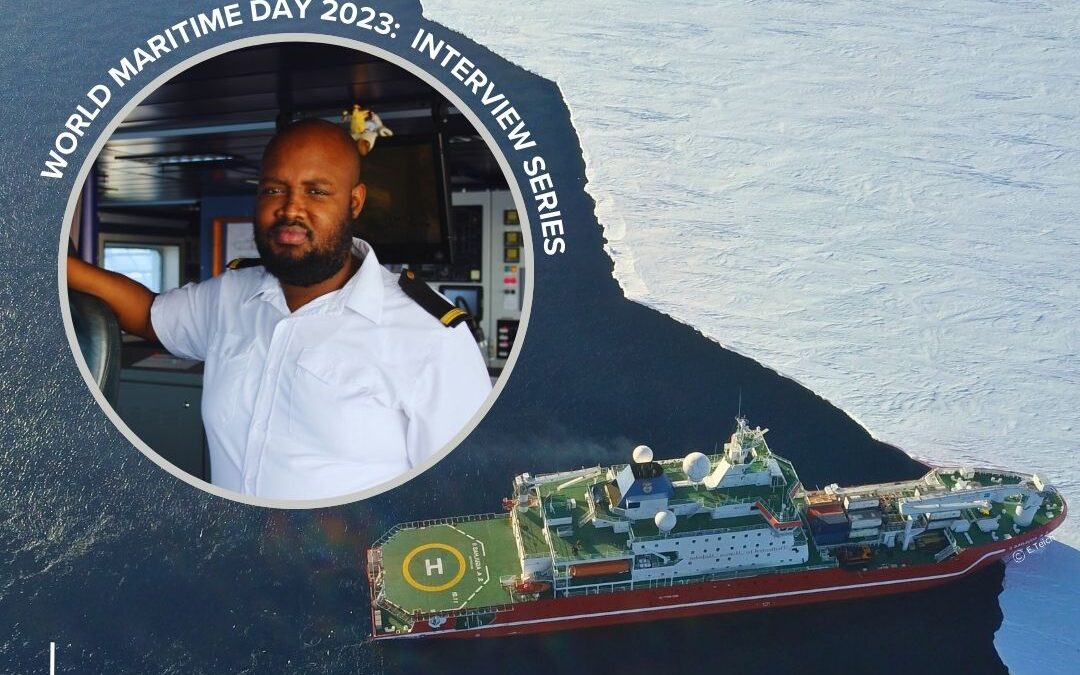
Today marks World Maritime Day, a global commemorative day celebrated every last Thursday of September. This annual observance serves as a tribute to the indispensable maritime industry and its pivotal role in connecting nations, enabling trade, and fostering economic growth. It is also an opportunity to reflect on the challenges facing the maritime sector and advocate for sustainable practices in an ever-changing world.
The International Maritime Organisation (IMO) has announced that this year’s World Maritime Day theme is “MARPOL at 50 – Our commitment goes on”. This theme highlights the 50th anniversary of the adoption of the International Convention for the Prevention of Pollution from Ships (MARPOL) on 2 November 1973. MARPOL focuses on preventing pollution of the marine environment caused by ships, whether it be from operational activities or accidental incidents.
International Cooperation and Sustainable Shipping
IMO currently has 175 Member States and three Associate Members. South Africa has been a member state of the IMO since 1995, sharing the responsibility to prevent pollution from ships.
In alignment with this year’s theme for World Maritime Day, we are reminded of the proactive measures taken by the country’s Department of Transport. In September 2022, they proposed amendments to the Marine Pollution (Prevention of Pollution from Ships) Act. One notable proposal is the potential increase in fines for ship pollution from R500,000 to R10 million, aiming to make non-compliance financially burdensome. These amendments specifically address the proper treatment and safe disposal of sewage from ships, as well as efforts to reduce greenhouse gas emissions that contribute to climate change and air pollution.
The South African research and supply vessel, the S.A. Agulhas II, is an example of a large ship that meets and complies with the regulations set forth in MARPOL. With its ice-breaking capability, the S.A. Agulhas II frequently navigates the Southern Ocean and Antarctic waters for scientific and research purposes as part of the South African National Antarctic Programme (SANAP).
S.A. Agulhas II entering the Port of Cape Town, on return from the sub-Antarctic Marion Island. Image credit: Abuyiselwe Nguna (SAPRI LTO:Land Research Coordinator).
The S. A. Agulhas II is a state-of-the-art vessel that has been constructed with effective waste management systems. It is equipped with an advanced in-house waste water treatment system that efficiently treats liquid waste, sewage, and greywater before storing or disposing of them within permitted limits. Grease traps are utilised to manage greasy liquid waste, and a comprehensive garbage management plan is in place for all solid waste. These measures ensure adherence to both national and international maritime waste policies, while also supporting South Africa’s leadership in marine and Antarctic research expeditions through SANAP.
Celebrating South Africa’s Seafarers
The SANAP and SAPRI have published The Maritime Interview Series to pay tribute to the seafarers who play a crucial role in the success of the maritime industry. These individuals dedicate their lives to seamanship and are responsible for navigating the S.A. Agulhas II across the Southern, Indian, and Atlantic Oceans for various marine and Antarctic research expeditions. The interview series features six seafarers who work on the S. A. Agulhas II through the vessel managing agent, African Marine Solutions (AMSOL). To learn more about these local heroes in the maritime industry, please visit the links provided below.
The Maritime Interview Series 2023
World Maritime Day encourages us to reflect on the importance of sustainability, safety, and international cooperation in ensuring the enduring prosperity of this sector. As we chart a course toward a more sustainable future, let us acknowledge and appreciate the dedication of those who keep the world’s seas and oceans alive. Together, we can work towards safeguarding these invaluable natural resources for generations to come.
To our local seafarers, we say THANK YOU, for your dedication and endurance while at sea!
Written by: Rabia Mathakutha, South African Polar Research Infrastructure, 28 September 2023
Edited by: Anche Louw (South African Polar Research Infrastructure) and Ria Olivier (Antarctic Legacy of South Africa)
by Ria Olivier | Mar 23, 2023 | Commemorative Days, International Days, Marion Island, Meteorology, Overwintering Team, SANAP, Southern Ocean, sub-Antarctic
Message from the Metkassies (Meteorological Technicians) currently on Marion Island.
Happy World Meteorological Day from the Metkassies on the 79th Marion Island overwintering team.
The South African Weather Service (SAWS) has been running a Meteorological station at Marion Island since 1950s.
As meteorological technicians, we preform monthly conformance and verification of the Automatic Weather Station (AWS) instruments.
This is normally done on a monthly basis to verify, check and maintain the weather station to ensure that the required standards of the South African Weather Service (SAWS) are met. In South Africa, SAWS is the voice for weather and climate forecasting and also a member of the World Meteorological Organization (WMO).
Happy Meteorological Day from the Metkassies on the 79th Marion Island overwintering team.
Senior Metkassie: T. Sikhwari
Assistants Metkassies: T. Tshitavhe and S. Faltein
Read more about the Marion met station here
Text: Thendo Sikhwari, Senior Meteorological Technician, M79
Edited: Anche Louw, South African Polar Research Infrastructure (SAPRI), 23 March 2023

 On 9 May 2026, the world once again celebrates World Migratory Bird Day (WMBD), a global campaign dedicated to raising awareness about migratory birds and the importance of international cooperation in conserving them. A second global celebration will take place on 10 October 2026.
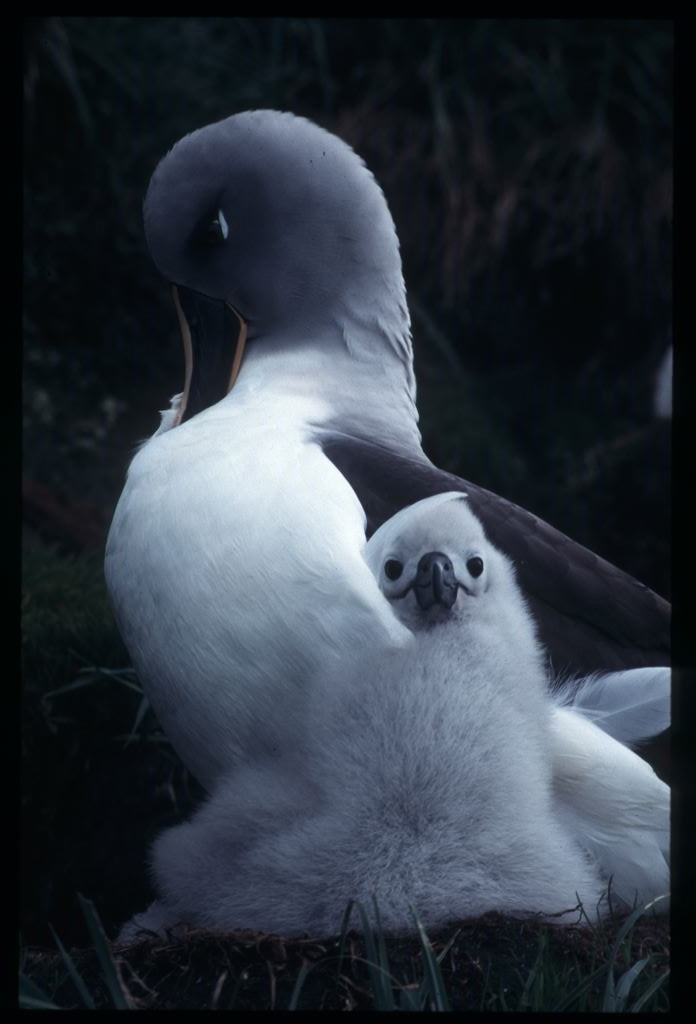 Marion Island situated in the Southern Ocean, Marion Island hosts globally populations of migratory seabirds. Species such as the Wandering Albatross, Grey-Headed Albatross, Sooty Albatross, and many more rely on the island for breeding and feeding. Many of these birds undertake journeys across oceans and continents. The island’s landscape and surrounding marine ecosystem make it one of the world’s most natural laboratories for seabird research and conservation. For decades, SANAP has supported internationally recognised research focused on seabirds, marine ecosystems, climate change, and conservation biology on Marion Island and Gough Island. A major contributor to this work is the world-renowned FitzPatrick Institute of African Ornithology at the University of Cape Town. Researchers from the FitzPatrick Institute, together with scientists from several South African and international institutions, have played a leading role in advancing understanding of seabird ecology, migration, breeding success, foraging behaviour, and population trends. This research contributes not only to South African conservation efforts but also to global scientific understanding of migratory species and Southern Ocean ecosystems.
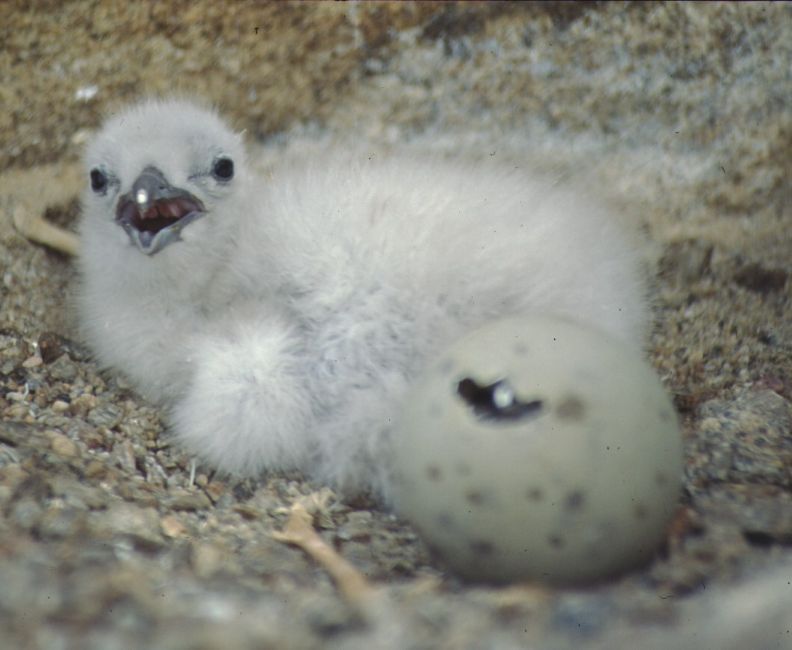 Every Observation Matters – The theme for World Migratory Bird Day 2026 reminds us that meaningful conservation is built on observations made over time. At SANAP stations, researchers, overwintering teams, voyage personnel, and field assistants regularly document bird life through their photographs. One particularly example is a timelapse video recorded by Otto Whitehead during a Marion Island takeover voyage in March 2023. Every image, every sighting, and every observation helps strengthen our collective understanding of migratory birds and the ecosystems on which they depend.
 In response, the Marion Mouse-Free Project was launched as a restoration initiatives and the project aims to eradicate invasive mice from Marion Island and restore the island’s ecological balance. The initiative represents a powerful collaboration involving conservationists, scientists, SANAP partners, donors, and volunteers working together to secure the future of Marion Island’s seabirds.


 The last session within the
  Above (l-r): Vonica Perold, Tegan Walker, Shamiso Banda, Danielle Keys, Eleanor Weideman
 To make your sponsorship to Mouse-Free Marion go to

 Dr Mia Wege chaired the session on Marine Mammals during the 6th SANAP Symposium that resorts within the Marine and Antarctic Research Strategy – ecosystems, biodiversity and biodiscovery. The session includes talks on various marine and the presentations were arranged according roughly to species and area. This Included elephant seals, fur seal, Ross seal, whales in ice, whales along the Southern African coast The session was presented in panel, discussion format, that allowed for questions form the audience. (Photo Credit: ALSA Archive)


 Two of the Principal investigators of the project were able to attend the symposium. ( Nico de Bruyn(left) – University of Pretoria and Jaco Versfeld (Right) Stellenbosch University)