by Ria Olivier | May 31, 2022 | Announcement, Gough Island, Marion Island, News, Prince Edward Island, SANAP, Science, Southern Ocean, sub-Antarctic, Tristan da Cunha
Congratulations to Prof Peter Ryan, awarded with the BirdLife South Africa Gill Memorial Medal, for an outstanding lifetime contribution to ornithology in southern Africa.

Prof Ryan, an A-rated Ornithologist and Director of the Percy FitzPatrick Institute of African Ornithology at the University of Cape Town, has been part of the South African National Antarctic Programme for more than two decades, doing research on seabirds breeding on Marion Island and the Tristan archipelago, which includes Gough Island. Prof Ryan’s latest research within SANAP is focused on “Avian scavengers as indicators of recovery of an island biota”, co-led with Dr Maëlle Connan (Research Fellow in the Marine Apex Predator Research Unit, Nelson Mandela University). Click here to read more about this project.
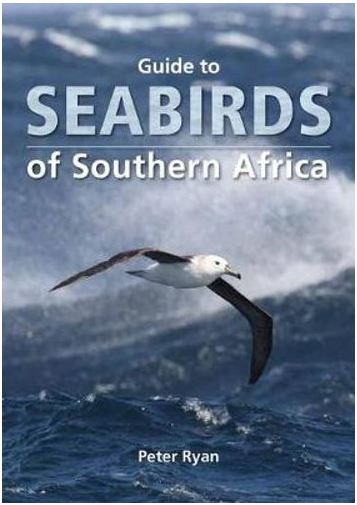
He is the author and co-author of a number of books on seabirds and the sub-Antarctic islands. Here is his latest publication: Guide to Seabirds of Southern Africa.
The Citation for Prof Ryan’s award – Click here.
In 2012, John Cooper, who was extensively involved in long-term seabird monitoring studies on Gough and Marion islands since the 1980s, received this award for his outstanding contribution to ornithology in southern Africa.
Featured Image: Prof Peter Ryan at the 5th SANAP Symposium (2018) in Hermanus, where he presented his work on “Plastics in Antarctica – preliminary findings from the Antarctic Circumnavigation Expedition (ACE).
Anche Louw, Antarctic Legacy of South Africa, 31 May 2022
by Ria Olivier | Nov 13, 2021 | Marion Island, Newsletters>Marion Island Newsletters
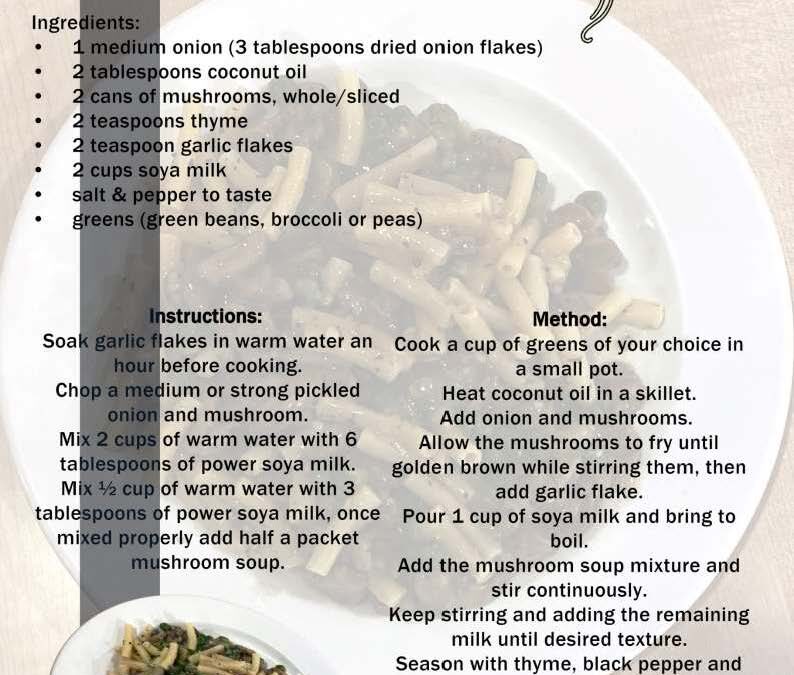
October newsletter now available online. Read about the activities of the overwintering team. Catch up on the news and try out their vegan recipe. and enjoy the moemnts capture on camera
- KILLER WHALER DIARIES
- WONDERFUL OLA, THE BEST GIANT PETREL
- FANGED FISH
- BIRDER’S FIELD DIARIES
- STIGGY ADVENTURES
- MARION PUTS ON HER BIKINI
- OCTOBER MADNESS
- A VEGAN TASTE
- TIME FOR A POEM
by Ria Olivier | Aug 27, 2021 | Environment, Marine Protected Area, Marion Island, Mice Eradication, Research, SANAP, Science
Ecosystem processes are changing worldwide, especially with the impacts of invasive species being exacerbated by climate change. This is particularly obvious in the Southern Ocean where a warmer and dryer environment allows the proliferation of species once limited by the cold climate. South African Special Nature Reserve, Marion Island is no exception. A recent proliferation of invasive House Mouse attacks on endangered breeding seabirds suggests a profound alteration of the natural ecosystem. This has led to the planned eradication of mice at Marion Island in winter 2023.
For the next three years, the new SANAP project co-led by Dr Maëlle Connan (Research Fellow in the Marine Apex Predator Research Unit, Nelson Mandela University) and Prof. Peter Ryan (director of the FitzPatrick Institute of African Ornithology – University of Cape Town) will focus on three data deficient species of avian scavengers: Black-faced Sheathbill, Kelp Gull and Brown Skua.
By focusing on these three species and some of their prey, the project intends first to fill identified scientific gaps that are crucial for best planning of the mouse eradication. Second, these three scavengers will be used as indicators of recovery of the terrestrial ecosystem post-eradication by establishing baselines for the scavenger guild and their prey against which the impact of a successful mouse eradication can be measured in years to come. (Above: Left – Maelle Connan, Right – Peter Ryan)
(Above l-r: Sub-Antarctic Skua, Black-Faced Sheathbill)
(Above: Eleanor Weideman on Marion Island)
An important aspect of the project will entail conducting regular censuses and seasonal round island counts in addition to behavioural observations of the focal scavenger species. Indeed, the three species to be studied are at the top of the terrestrial food chain, and thus can be used as indicators of recovery of the island biota post-eradication.
On one hand, Black-faced Sheathbills and Kelp Gulls used to predate on terrestrial invertebrates, at least seasonally, but this behaviour has decreased in sheathbills as invertebrate populations have collapsed through mouse predation. There are no recent data for Kelp Gulls. On the other hand, many pairs of Brown Skuas predate mainly on burrowing petrels, thus will inform on the recovery of these nocturnal species from mouse predation. The skua data will be complemented by the implementation of an automated acoustic monitoring to detect the presence and coarse distribution of the most elusive and cryptic nocturnal species which are notoriously difficult to study. (Left – Eleanor Weideman in the field on Marion Island.)
Data obtained during the project will be swiftly shared to the Mouse-Free Marion programme manager Dr Anton Wolfaardt, to ensure updated information is available for the best planning of the mouse eradication.
Cover Image: Sub-Antarctic Skua – photo credit: Maelle Connan
Text supplied by Maelle Connan.
Photo Credits: Maelle Connan, Yinhla Shihlomuhe, Isabel Micklem.
by Ria Olivier | Jul 31, 2021 | International Days, Marine Protected Area, Marion Island, Prince Edward Island, Prince Edward Islands
The 1st of August 2021 represents Africa’s first ever Marine Protected Area Day. “A Marine Protected Area (MPA) is an area of coastline or ocean that is specially protected for the benefit of people and nature The rich diversity of coastal and ocean ecosystems in South Africa are protected through a network of MPAs. Prior to 2019, there were 25 formally declared MPAs including 23 permanent coastal MPAs, including the large Prince Edward Islands (PEIs) MPA in the Southern Ocean. Thirty percent of South Africa’s territory in the Southern Ocean is protected by Prince Edward Islands MPA- https://www.marineprotectedareas.org.za
MARINE LIVING RESOURCES ACT 18 OF 1998 = – REGULATIONS FOR THE MANAGEMENT OF THE PRINCE EDWARD ISLANDS MARINE PROTECTED AREA – Published under Government Notice R422 in Government Gazette 36572, dated 21 June 2013. Gazette No. 18930, Notice No. 747. Commencement date: 1 September 1998 [Proc. No. 80, Gazette No. 19148]
Prince Edward Islands Marine protected Area is a “A volcanic sub-Antarctic wilderness teeming with hundreds of thousands of penguins, albatrosses, petrels and seals. The Prince Edward Islands are the jewels in South Africa’s island crown. They comprise of the larger Marion Island and the smaller Prince Edward Island, which were annexed by the South African navy in 1948. A permanent weather station has been in operation ever since that provides vital information needed to monitor weather and climate change in the Southern Ocean. The islands are home to unique plants and animals not found near the South African mainland. There are millions of penguins, albatrosses, petrels, seals and a transient group of killer whales. The MPA was proclaimed in 2013 and covers 30% of South Africa’s Southern Ocean territory, representing 80% of its ecosystem diversity. It protects the productive waters surrounding the islands, as well as important features such as seamounts. This ensures that the krill and fish stocks that top predators depend on are not overexploited. Historically, there was intense fishing for Patagonion toothfish, but this collapsed and has been restricted to two vessels to allow for their recovery. The terrestrial ecosystems are under threat from invasive house mice that were accidentally introduced in the 1800s. The Mouse Free Marion project plans to eradicate the mice in 2021 to allow for the ecological recovery of the island’s plant, insect and seabird communities.” –https://www.marineprotectedareas.org.za/prince-edward-islands-mpa
Prince Edward Island
Marion Island
Images, videos and documents available on the Antarctic Legacy of South Africa’s Archive:
by Ria Olivier | Aug 17, 2020 | Antarctica, SANAP, sub-Antarctic
Nish Devanunthan is the Director of Southern Oceans & Antarctic Support in the Department of Environment Forestry and Fisheries: Oceans & Coasts. Nish hails from a small town in Kwazulu Natal on the North Coast. Nish spent the first 10 years of his career as an engineer in the research and development of telemetry products. He then ventured into the world of management as Senior Manager of the Technical Division of the South African Weather Service, after which he joined the Department as Director in 2013. His undergraduate studies are in Engineering and Project management, which he uses on a daily basis in his current position. Despite his demanding job and family responsibility he completed his MBA in 2017. He is responsible for a very multidisciplinary and diverse program which includes some activities like:
- Planning, forecasting and overseeing execution of projects in areas such as – Planning and Administration, Engineering Support and Client Relationship Management and OHS.
- Financial Management of an annual operating budget in excess of R200m.
- Contract Management of major service contracts – collectively valued over R1Bn.
- Development of strategies, business plans and operational plans for the Directorate
- Managing tenders for the solicitation of goods and services.
- National and International client liaison.
- Effective negotiation and collaboration with clients for opportunities in Logistics collaboration and commercial charters.
- Effective Risk management through pro-active identification of points of failure and setting up mitigation actions.
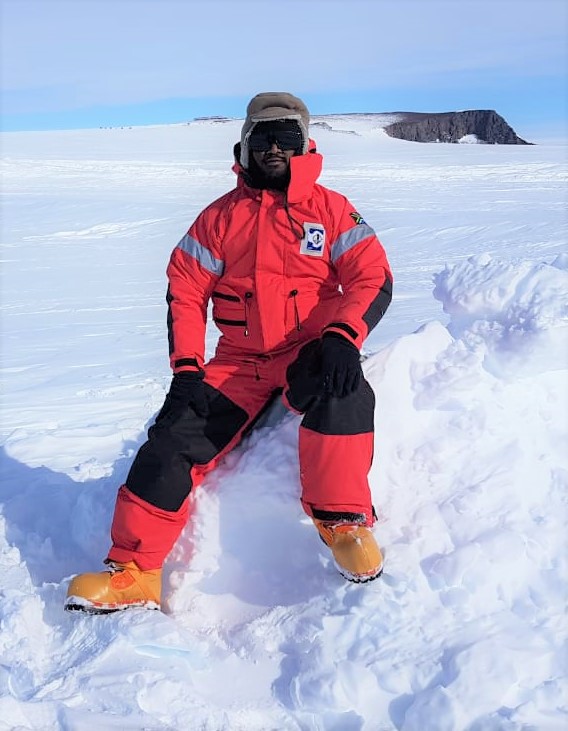
Nish has been to SANAE IV and Marion Island and represents South Africa at the Council for Managers of National Antarctic Programs with Lisolomzi Fikizolo. He is the main contract negotiator with international partners and commercial charters for the SA Agulhas II including the Weddell Sea expedition that took place 2018-2019. (Above l-r: Antarctica, Marion Island, COMNAP 2017)
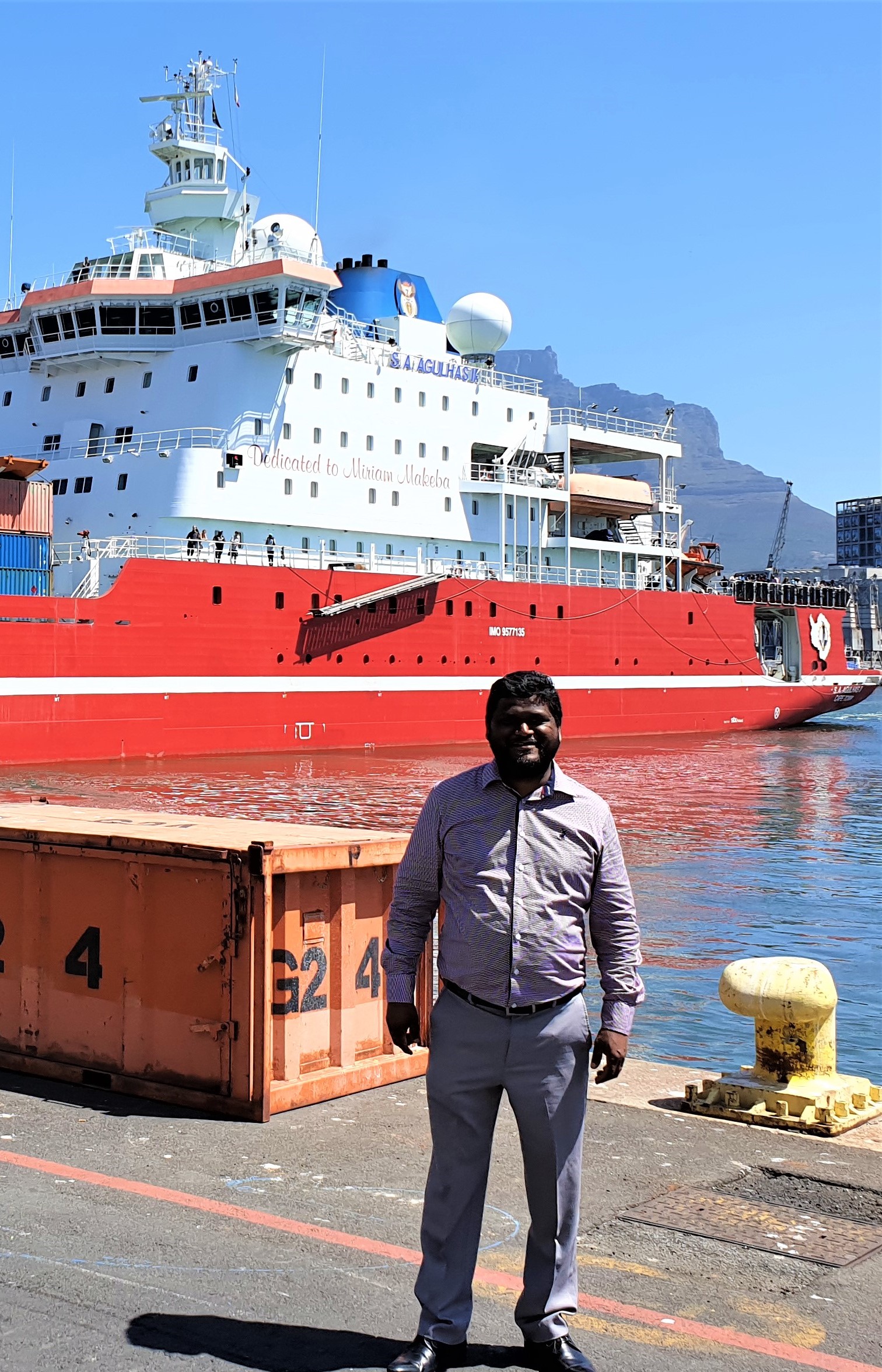
He has seen many teams depart and arrive at East Pier in Cape Town
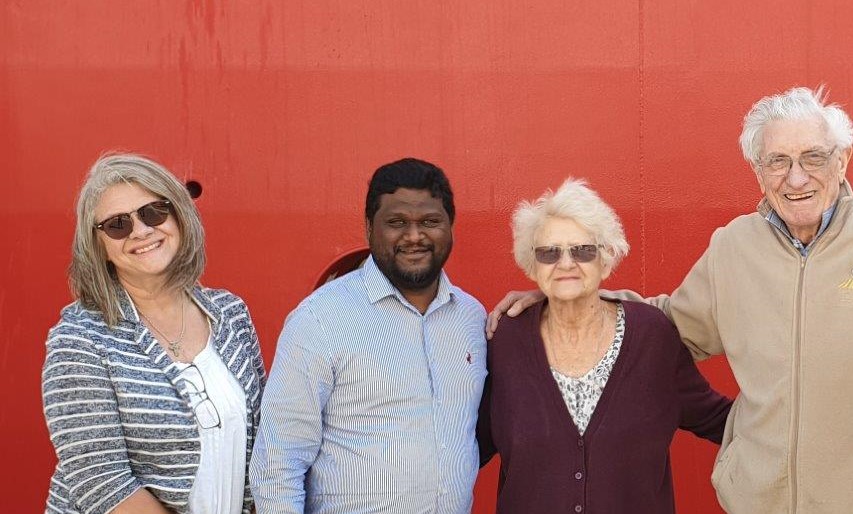
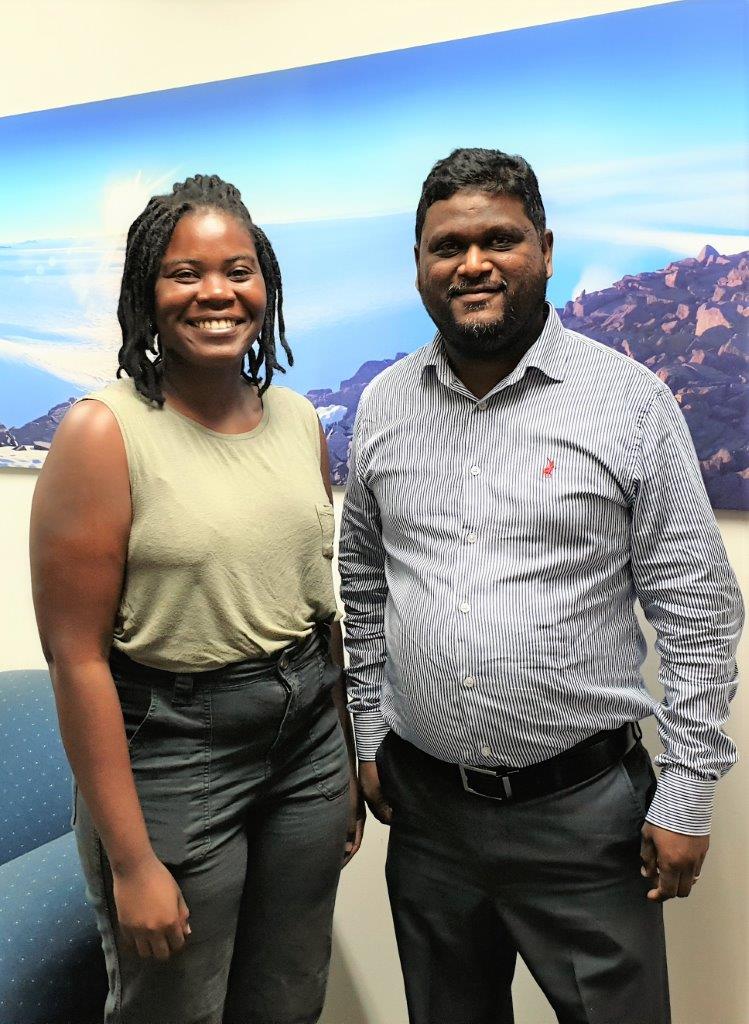
Left: Nish with Gilbert Siko of DSI at the launch of the 360 of SANAE. Middle: Promoting the new SANAP website at East Pier. Right: Rudzani Silima-ACYE champion (at East pier getting her gear for her expedition) with Nish. Nish works closely together with the ALSA team to ensure that the SANAP website is up to date and to adhere to government regulations such as the message during the COVID-19 pandemic(below).
He took time to celebrate 60 years of the SANAE1 departure with SANAE1 leader Hannes La Grange’s wife Mettie and daughter Karen Hechter as well as team member Chris de Weerdt of SANAE1 on 3 December 2019.
Nish is a family man with 2 beautiful children. He has many hobbies and his favourite pastime is woodworking! His other hobbies include reading and playing Xbox with his son. He also enjoys cooking ….for the driver team that was in Antarctica in 2014, they will concur that Nish makes a great curry since they were literally licking the pot to make sure there was none going to waste.
Ria Olivier, Antarctic Legacy of South Africa, 17 August 2020





 This is particularly obvious in the Southern Ocean where a warmer and dryer environment allows the proliferation of species once limited by the cold climate. South African
 For the next three years, the new SANAP project co-led by Dr Maëlle Connan (Research Fellow in the
 (Above l-r: Sub-Antarctic Skua, Black-Faced Sheathbill)
 On one hand, Black-faced Sheathbills and Kelp Gulls used to predate on terrestrial invertebrates, at least seasonally, but this behaviour has decreased in sheathbills as invertebrate populations have collapsed through mouse predation. There are no recent data for Kelp Gulls. On the other hand, many pairs of Brown Skuas predate mainly on burrowing petrels, thus will inform on the recovery of these nocturnal species from mouse predation. The skua data will be complemented by the implementation of an automated acoustic monitoring to detect the presence and coarse distribution of the most elusive and cryptic nocturnal species which are notoriously difficult to study. (Left – Eleanor Weideman in the field on Marion Island.)
 Cover Image: Sub-Antarctic Skua – photo credit: Maelle Connan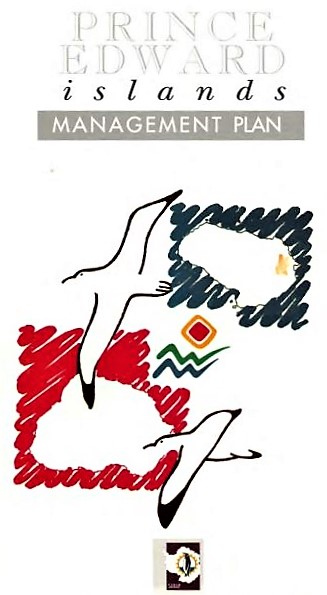
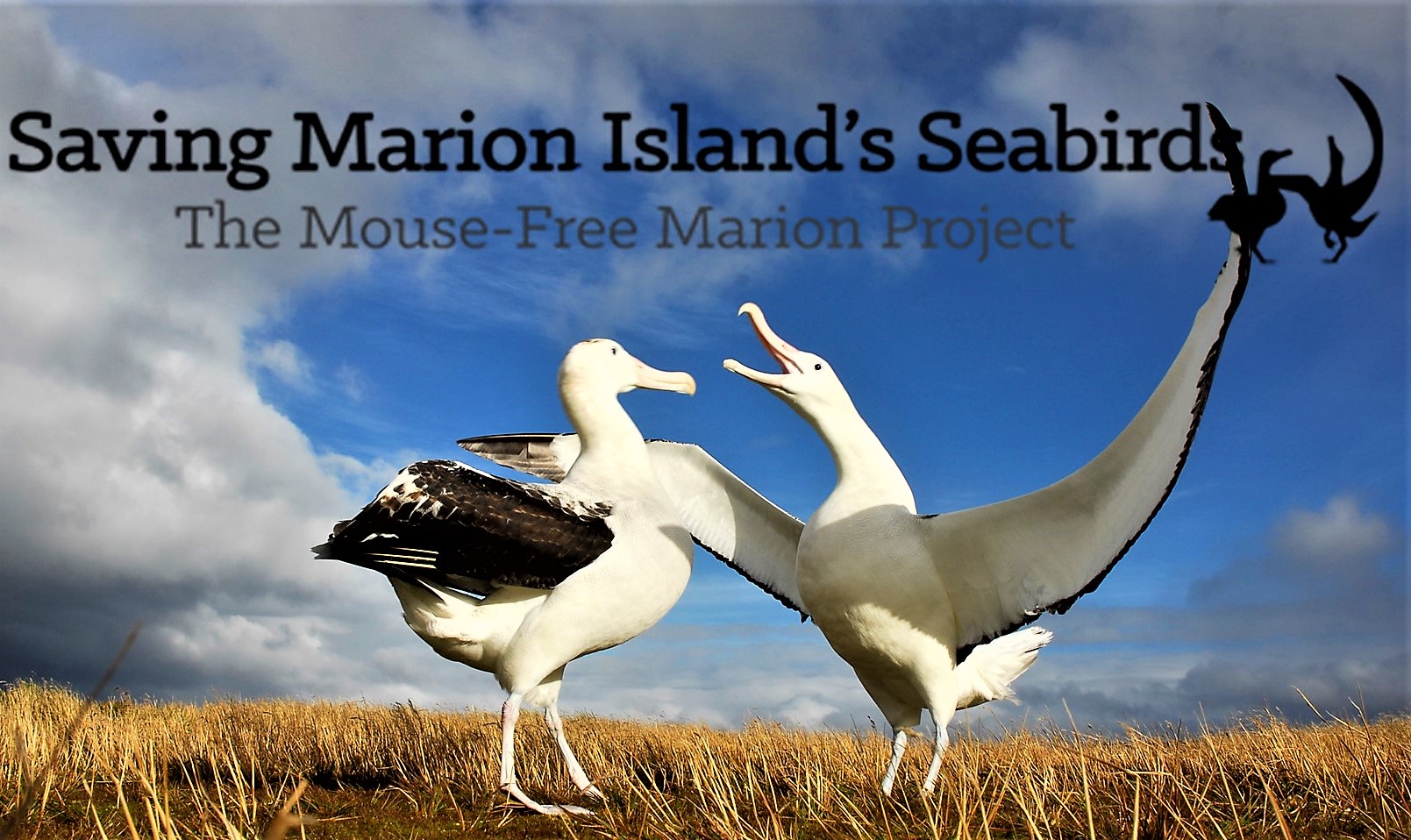 The 1st of August 2021 represents Africa’s first ever Marine Protected Area Day. “A Marine Protected Area (MPA) is an area of coastline or ocean that is specially protected for the benefit of people and nature The rich diversity of coastal and ocean ecosystems in South Africa are protected through a network of MPAs. Prior to 2019, there were 25 formally declared MPAs including 23 permanent coastal MPAs, including the large Prince Edward Islands (PEIs) MPA in the Southern Ocean. Thirty percent of South Africa’s territory in the Southern Ocean is protected by Prince Edward Islands MPA-
  Prince Edward Islands Marine protected Area is a “A volcanic sub-Antarctic wilderness teeming with hundreds of thousands of penguins, albatrosses, petrels and seals. The Prince Edward Islands are the jewels in South Africa’s island crown. They comprise of the larger Marion Island and the smaller Prince Edward Island, which were annexed by the South African navy in 1948. A permanent weather station has been in operation ever since that provides vital information needed to monitor weather and climate change in the Southern Ocean. The islands are home to unique plants and animals not found near the South African mainland. There are millions of penguins, albatrosses, petrels, seals and a transient group of killer whales. The MPA was proclaimed in 2013 and covers 30% of South Africa’s Southern Ocean territory, representing 80% of its ecosystem diversity. It protects the productive waters surrounding the islands, as well as important features such as seamounts. This ensures that the krill and fish stocks that top predators depend on are not overexploited. Historically, there was intense fishing for Patagonion toothfish, but this collapsed and has been restricted to two vessels to allow for their recovery. The terrestrial ecosystems are under threat from invasive house mice that were accidentally introduced in the 1800s. The

 Nish Devanunthan is the Director of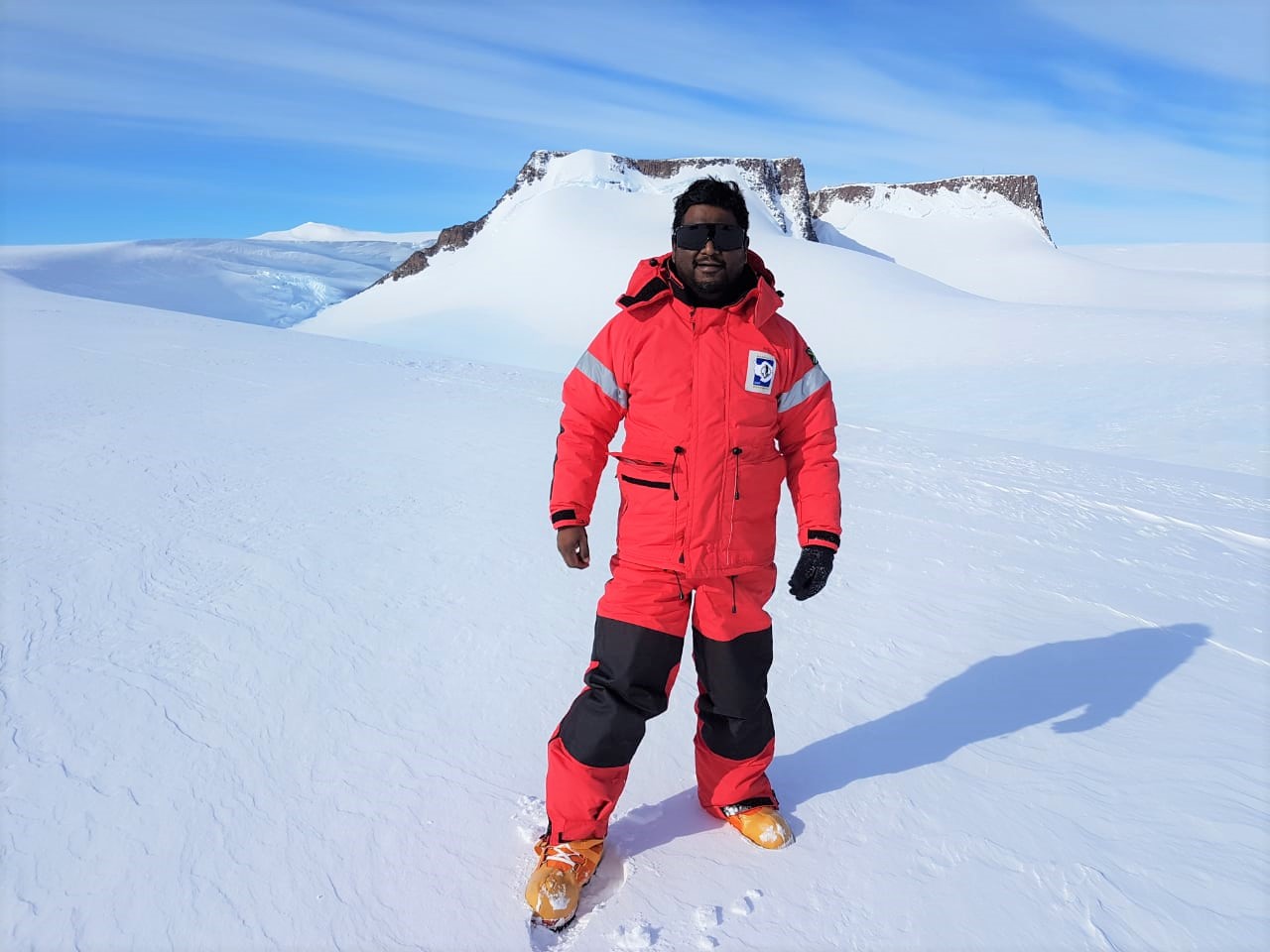
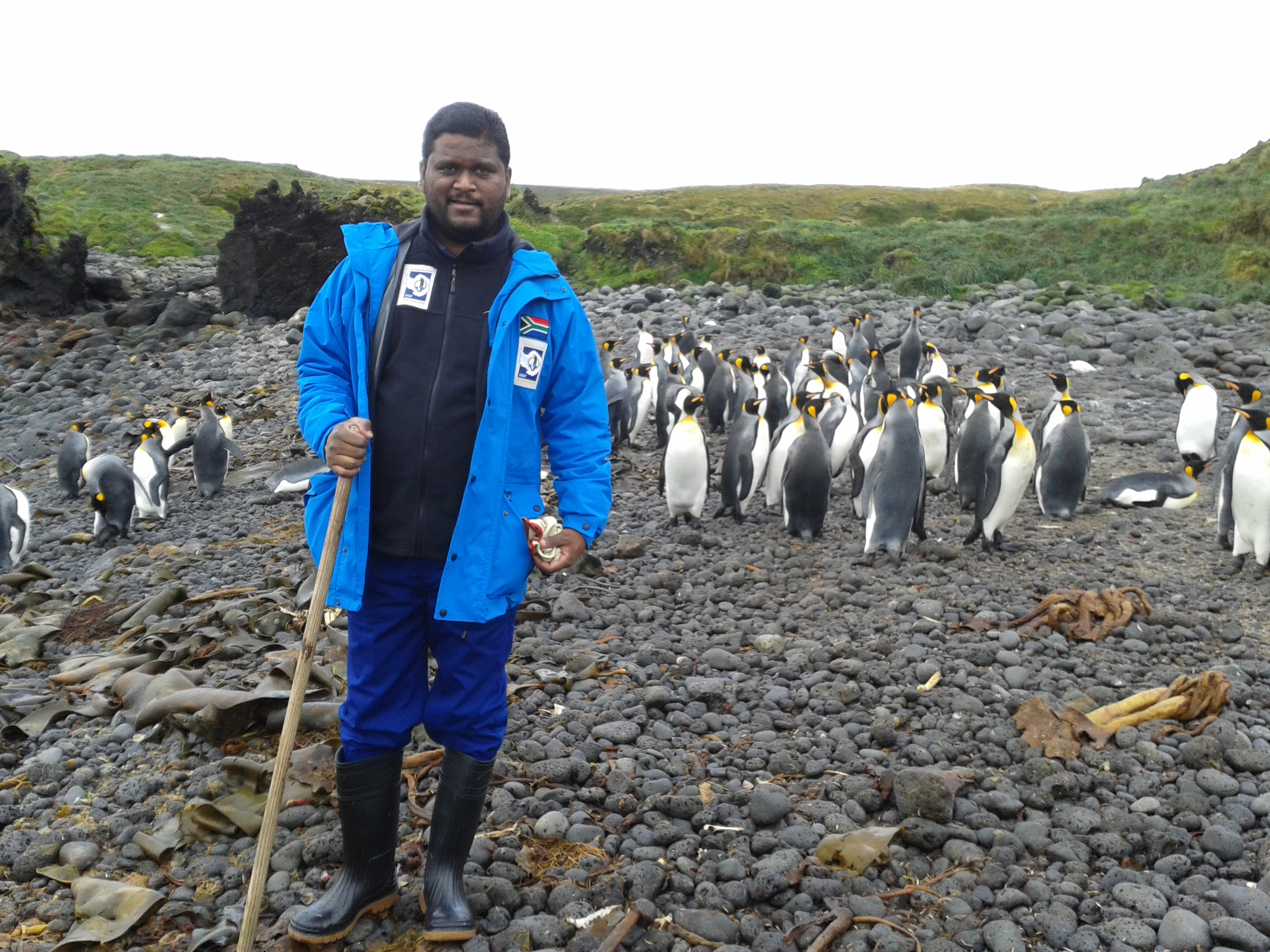
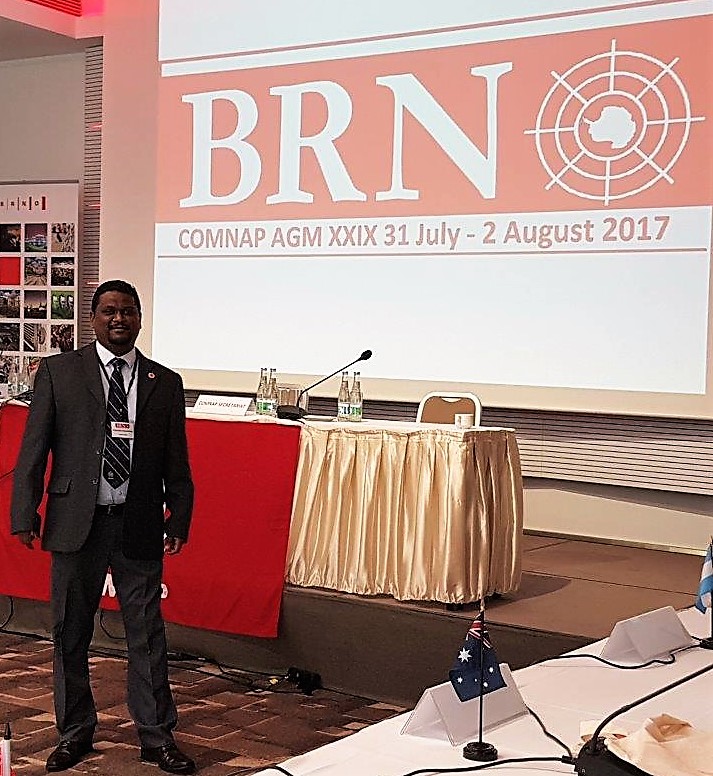 Nish has been to SANAE IV and Marion Island and represents South Africa at the Council for Managers of National Antarctic Programs with Lisolomzi Fikizolo. He is the main contract negotiator with international partners and commercial charters for the SA Agulhas II including the Weddell Sea expedition that took place 2018-2019. (Above l-r: Antarctica, Marion Island, COMNAP 2017)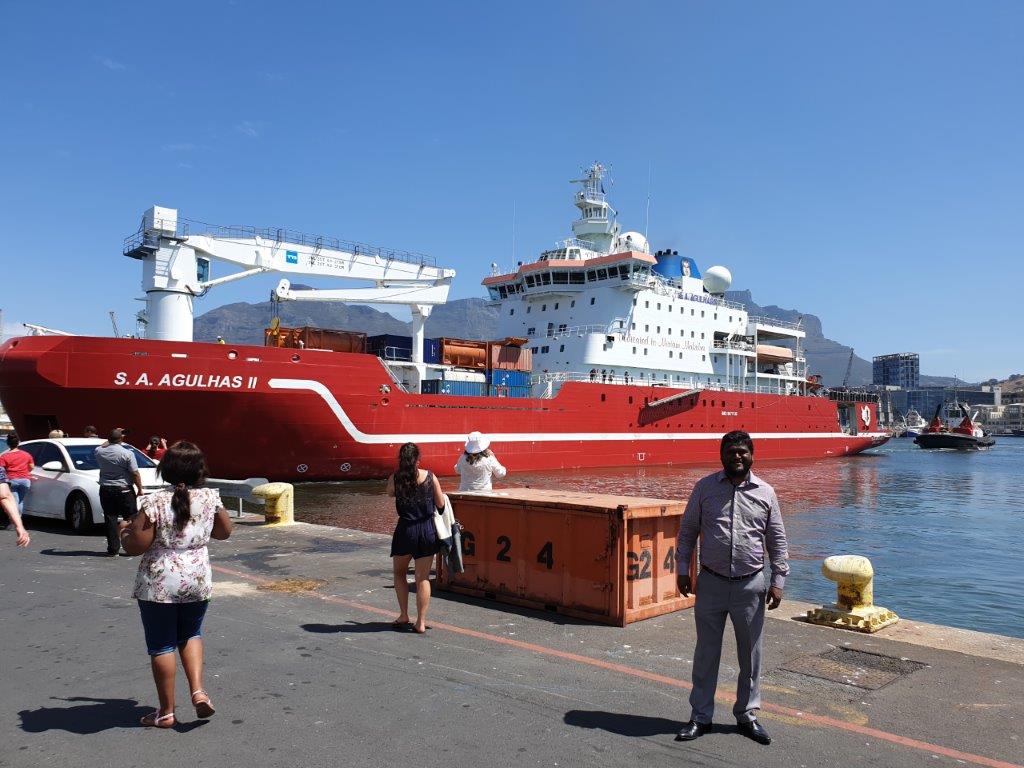
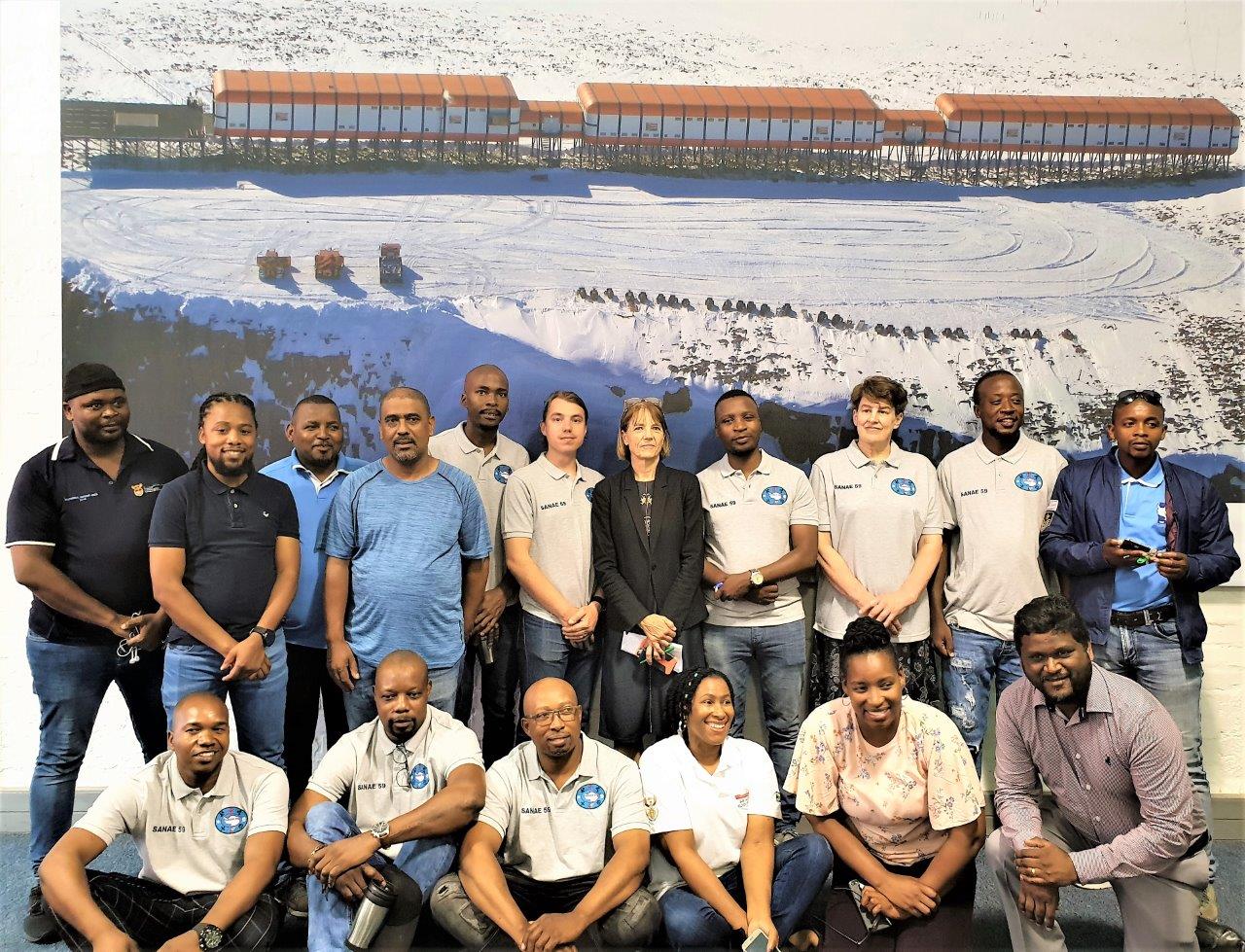
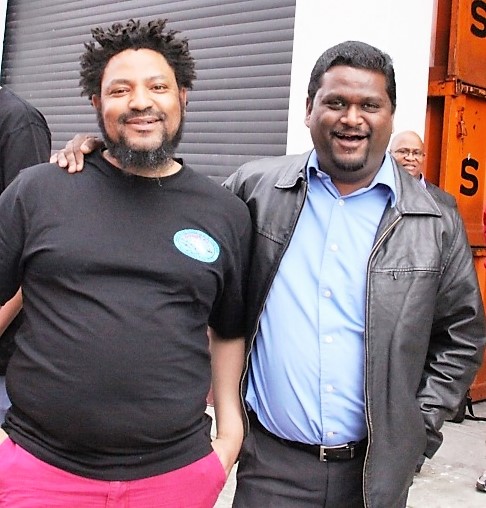 He has seen many teams depart and arrive at East Pier in Cape Town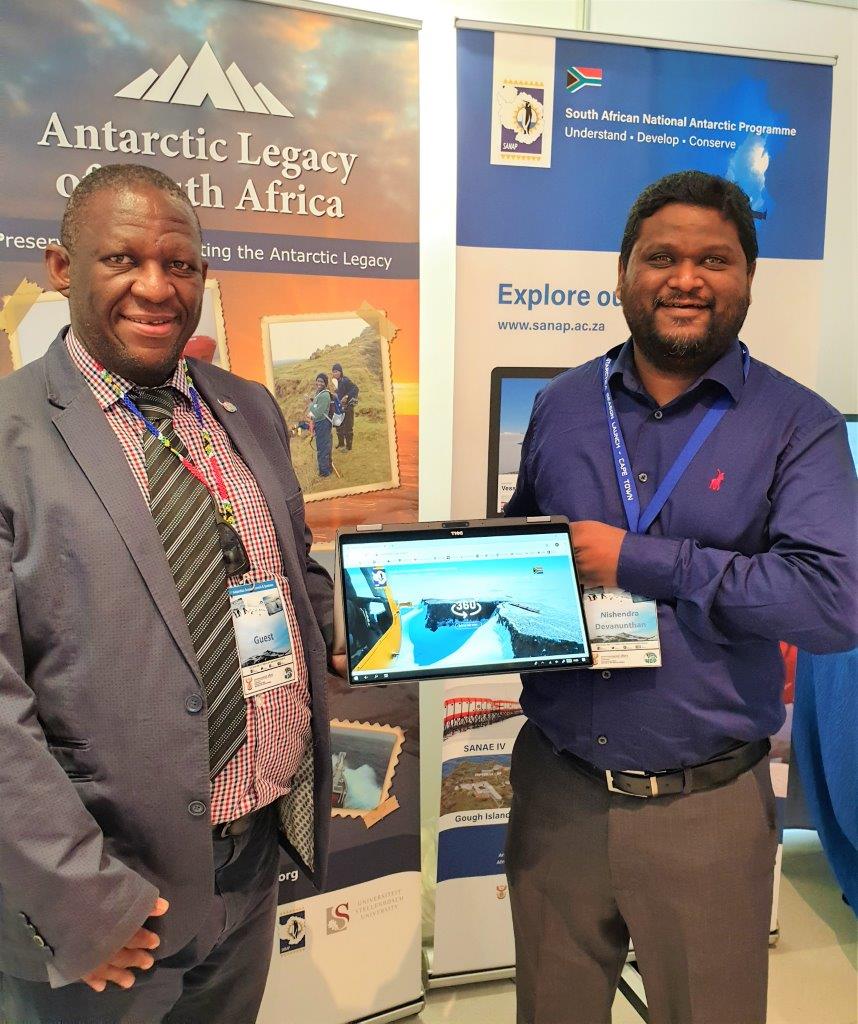
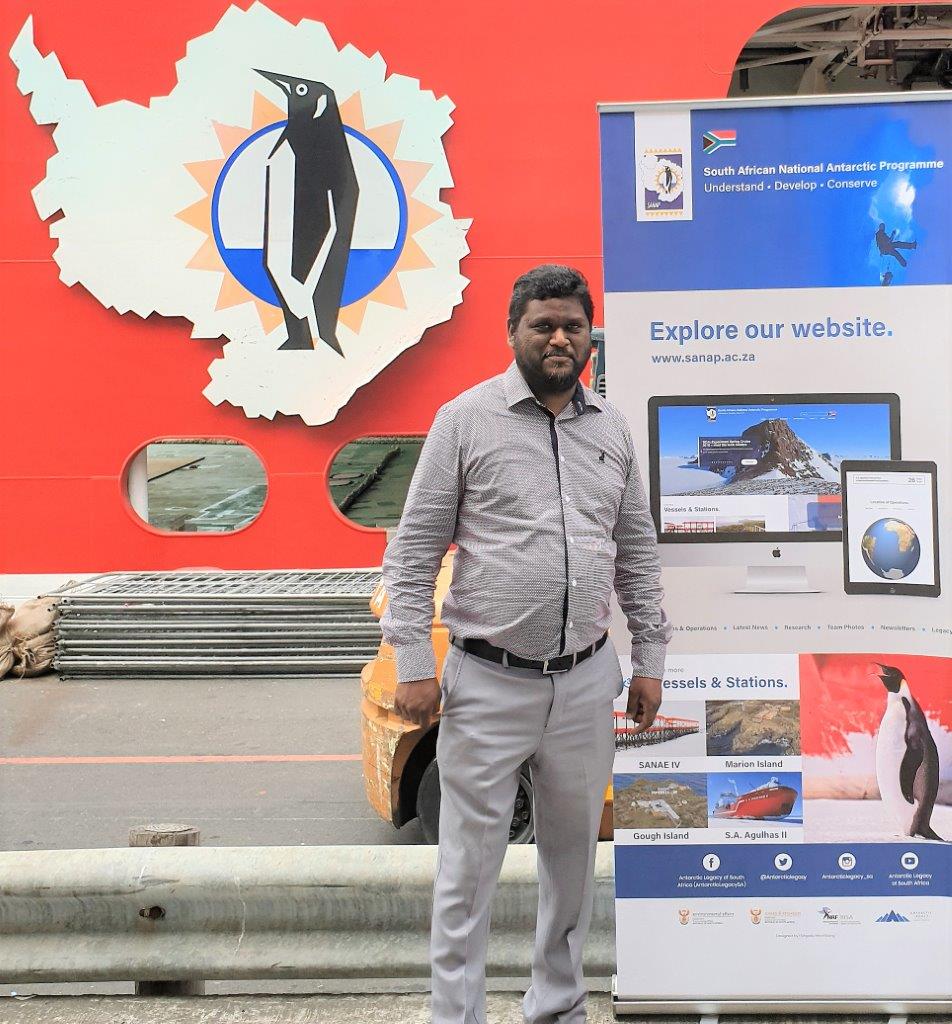
 Left: Nish with Gilbert Siko of DSI at the launch of the 360 of SANAE. Middle: Promoting the new SANAP website at East Pier. Right: Rudzani Silima-ACYE champion (at East pier getting her gear for her expedition) with Nish. Nish works closely together with the ALSA team to ensure that the SANAP website is up to date and to adhere to government regulations such as the message during the COVID-19 pandemic(below).